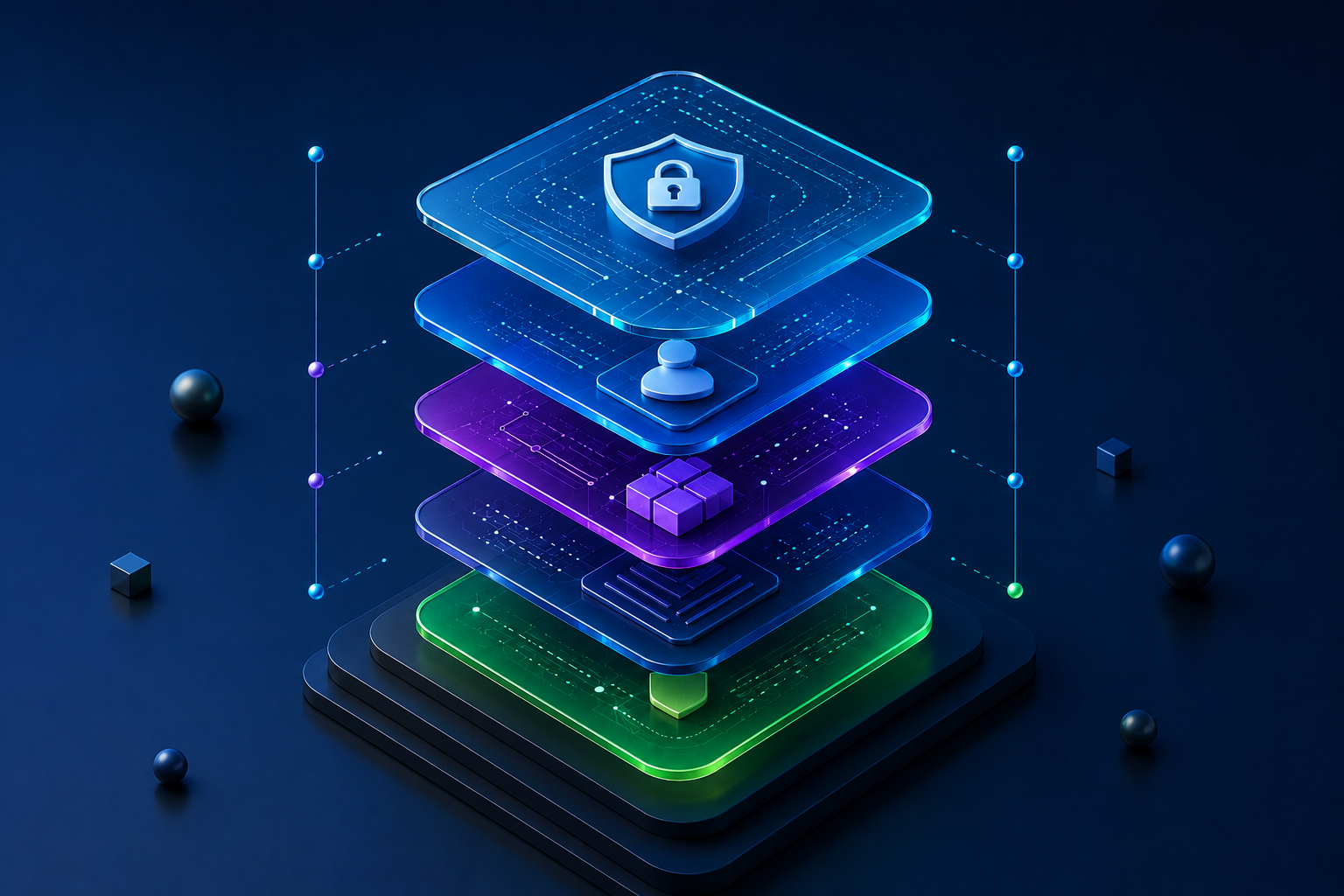
Helping SMEs reduce business risk through secure digital operations.
Discuss your goals, requirements, and available options — with no obligation.
Why secure business systems have become a business priority.
For many SMEs, digital systems are now central to daily operations, customer engagement, and business growth. As organisations become increasingly dependent on websites, customer portals, and cloud applications, building secure business systems through security hardening has become essential for protecting business operations and customer information.
As businesses become increasingly reliant on digital operations, security is no longer just a technical concern—it is a business requirement. Regular website security checks and secure development practices help identify vulnerabilities before they become operational risks.
A security incident can disrupt operations, damage customer confidence, create financial losses, and divert valuable time and resources away from growth-focused activities.
At the same time, customers expect businesses to handle information responsibly. How data is collected, stored, protected, and used has become an important factor in building trust, maintaining customer relationships, and supporting long-term business success.
The business risks of weak security hardening and data governance.
Many organisations focus heavily on functionality, growth, and customer acquisition while giving less attention to security and governance.
This can expose businesses to risks such as:
- unauthorised access to systems
- data breaches
- operational disruption
- ransomware attacks
- accidental data exposure
- misuse of sensitive information
The impact often extends far beyond technology. Businesses may experience downtime, recovery costs, reputational damage, reduced customer confidence, and interruptions to normal operations. Regular website security testing and continuous monitoring help organisations identify weaknesses early, reducing the likelihood of security incidents and costly operational disruption.
For SMEs, even a single significant incident can have lasting consequences.
A reactive approach often proves far more expensive than building security and governance into systems from the beginning.
Building security hardening into business applications from day one.
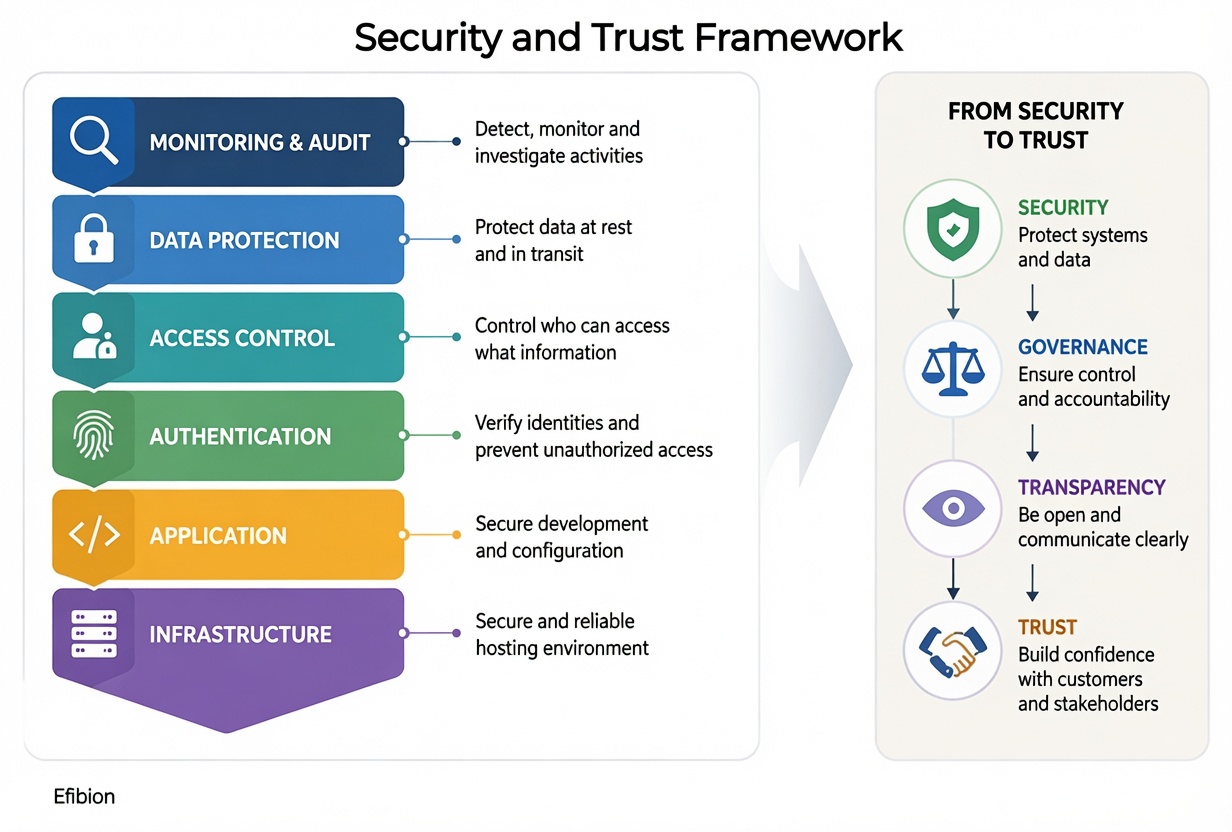
Effective security is not achieved by relying solely on hosting providers or external security tools. Security is most effective when security hardening is built into business applications throughout design, development, deployment, and ongoing operation.
Security hardening is the process of reducing potential vulnerabilities before software is deployed. It includes strengthening authentication, securing APIs, encrypting sensitive information, configuring applications securely, and applying practical safeguards that reduce business risk without making systems more difficult to use.
For SMEs, security hardening should be viewed as a preventative investment rather than simply another technology cost. Focused security measures can often be introduced for several hundred pounds, depending on the system and requirements.
By addressing vulnerabilities, strengthening access controls, protecting data, and securing applications before problems occur, businesses can reduce the likelihood and potential impact of security incidents. This can help avoid the much higher costs associated with emergency cybersecurity services, incident investigation, system recovery, business downtime, and reputational damage. The objective is not to eliminate all risk, but to reduce avoidable exposure and make the business more resilient.
Programming languages and technologies such as Python, JavaScript, HTML, Django, APIs, and AWS cloud services can be used together to build and support secure business applications and their infrastructure. This can include:
- secure user authentication
- role-based access controls
- protected workflows
- data protection measures
- activity logging and audit trails
- ongoing security monitoring
Building these controls into the system from the beginning can reduce the likelihood and potential impact of security incidents while providing stronger control over business data and operations.
Strengthening protection, visibility, and customer trust.
When security is aligned with how the business actually operates, organisations gain stronger protection without creating unnecessary complexity for employees or customers.
A proactive development approach includes regular security reviews, vulnerability assessments, and secure development practices that identify weaknesses before systems reach production.
For systems that exchange information between applications, secure backend API testing helps verify that data is transferred safely, authorised correctly, and protected against common security vulnerabilities.
Modern businesses are increasingly responsible for how information is collected, processed, stored, and shared. Strong data governance works alongside security hardening to protect both business operations and customer trust.
Strong governance provides greater control over:
- who can access information
- how data is used
- how long information is retained
- how business activities are monitored
Visibility is equally important. Logging and audit capabilities help organisations understand what happened, when it happened, and who performed specific actions. This improves accountability and supports faster investigation when issues arise.
Beyond regulatory compliance, responsible data practices focus on using information transparently, ethically, and in ways that align with customer expectations.
Businesses that clearly communicate how data is collected and used are often better positioned to build trust, strengthen customer relationships, and maintain confidence over the long term.
Gain Clarity on Your Next Steps.
Creating secure foundations for sustainable business growth.
Cybersecurity is not a one-time project. As businesses grow, their systems, data, and operational risks evolve alongside them.
A mature approach allows security controls, governance processes, monitoring capabilities, and operational protections to develop as the organisation expands, helping maintain resilience without creating unnecessary complexity.
Success is measured through practical business outcomes, including:
- Reduced security incidents
- Reduced business downtime
- Improved business continuity
- Stronger customer trust
- Lower financial risk
- Greater operational visibility
- Stronger business resilience
Businesses that treat cybersecurity and data governance as core operational foundations are better positioned to protect customers, support growth, and maintain reliable digital services over the long term.
Ultimately, cybersecurity success is measured by the ability to maintain trusted, reliable, and uninterrupted digital operations while reducing business risk and enabling sustainable business growth.
When security becomes an afterthought.
Businesses that treat security as an afterthought often discover weaknesses only after problems occur, resulting in higher costs, operational disruption, and loss of customer trust.
As digital operations become increasingly important, security weaknesses can affect far more than technology alone. They can disrupt business activities, expose sensitive information, and create risks that impact customers, employees, and day-to-day operations.
Over time, unmanaged risks can lead to operational disruption, reduced customer confidence, increased financial exposure, and greater difficulty maintaining reliable digital services.
Explore guidance tailored to your business.
Building security around your business processes.
When security is aligned with how the business actually operates, organisations gain stronger protection without creating unnecessary complexity for employees or customers.
A structured approach begins by identifying critical business processes, understanding how information flows through the organisation, and applying appropriate security controls across websites, business applications, APIs, and operational workflows.
Rather than treating security as a separate technical function, organisations can integrate security hardening, data governance, monitoring, access controls, encryption, and data protection into everyday operations in a practical and scalable way.
Building secure business systems is not about adding complexity—it is about reducing business risk through practical security hardening, responsible data governance, and secure development practices that support reliable day-to-day operations and sustainable business growth.
Get this article as a PDF.
Access practical guidance, actionable insights, and structured resources to support informed business decisions.
Turn your ideas into an actionable plan.